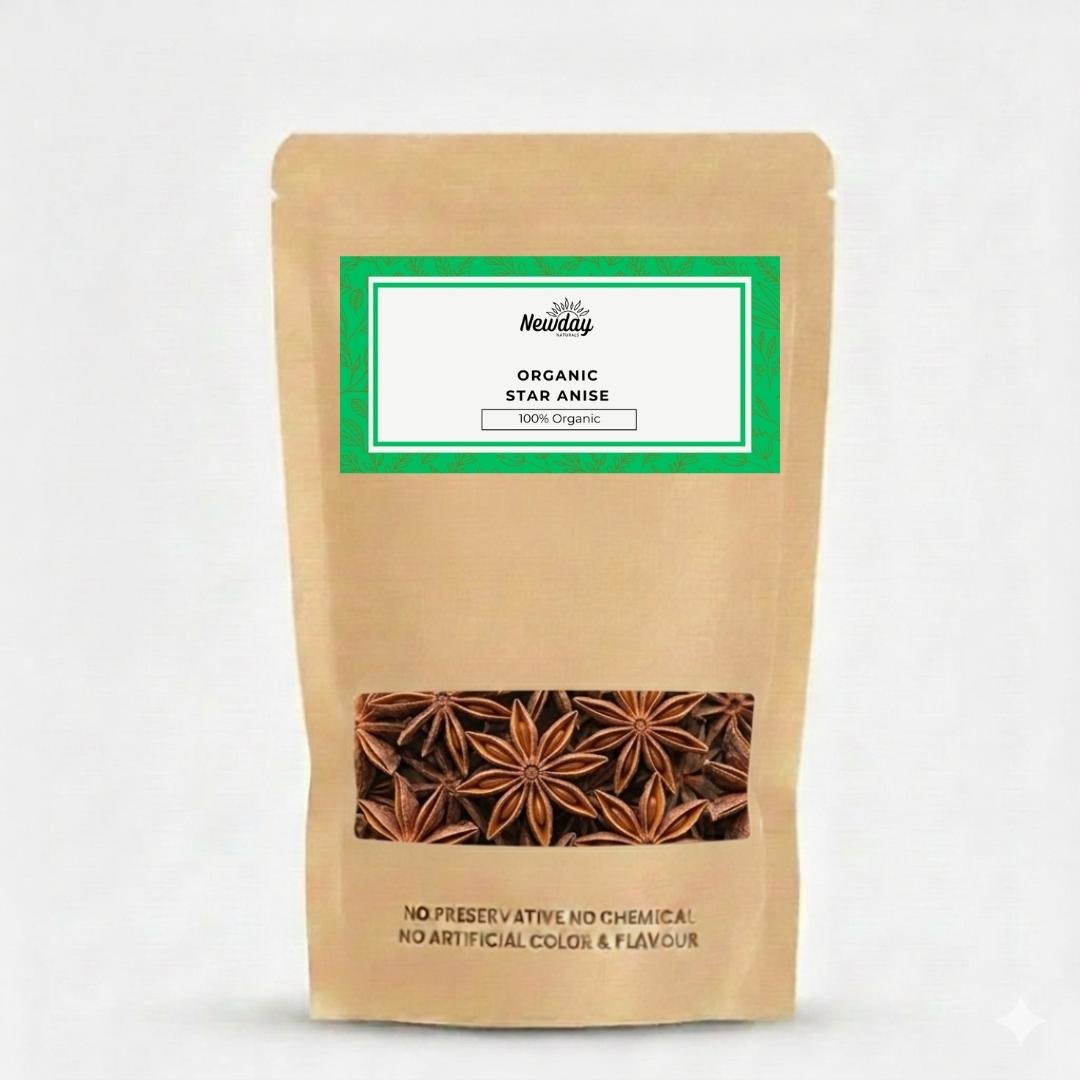
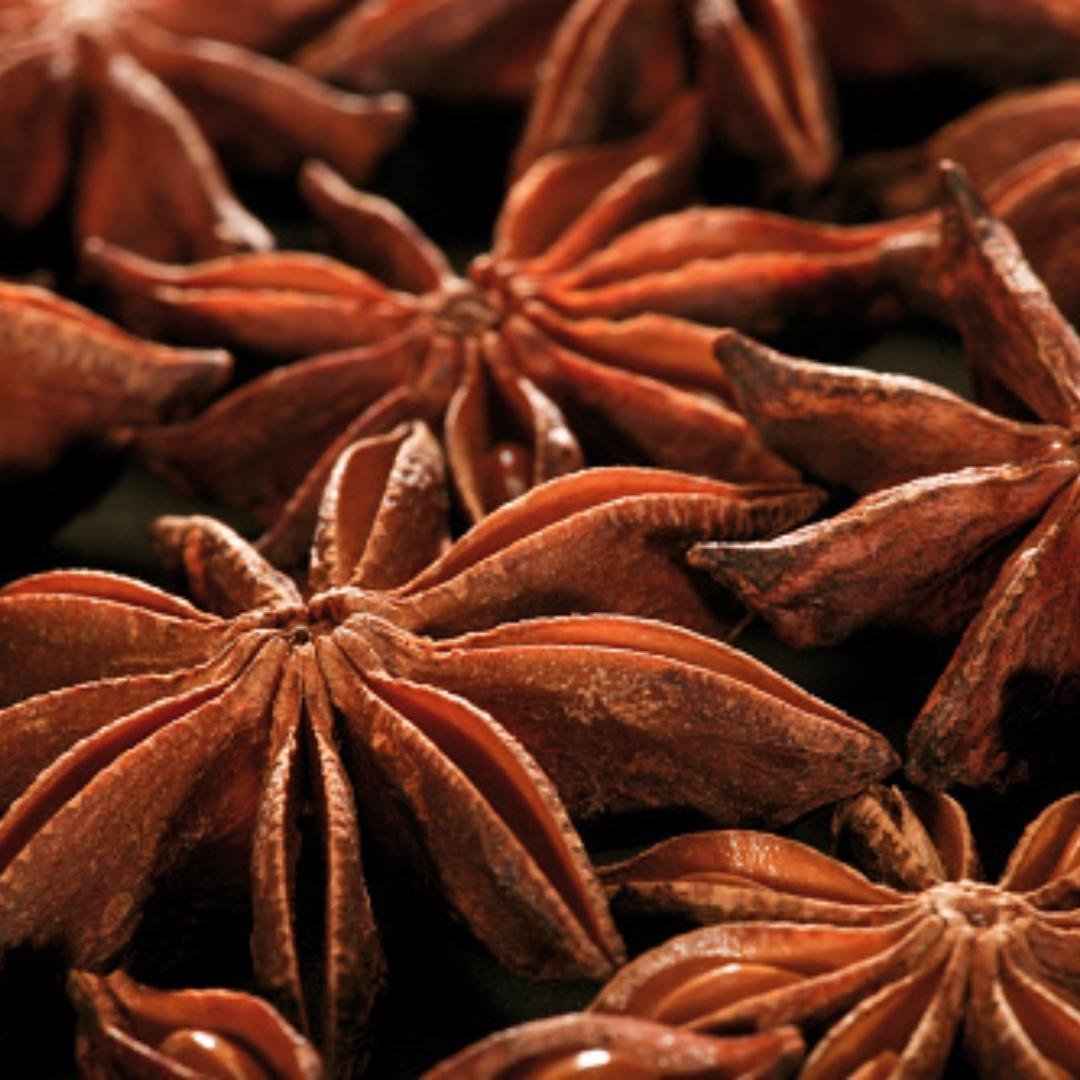
Star Anise is famous for containing anethole, the same essential oil found in anise seed and fennel, giving it a distinct "licorice" profile. However, Star Anise is deeper, more pungent, and slightly more bitter than its counterparts. In high-quality harvests, each "point" of the star contains a shiny, polished seed that holds a concentrated burst of flavor.
Characteristics
- Appearance: A tough, rust-colored, star-shaped pod. A perfect star has 8 points, though they can vary from 6 to 10.
- Texture: Woody and brittle. The pods are not meant to be eaten whole; they are used to infuse liquids or ground into a fine powder.
- Flavor Profile: Intense licorice (anise), sweet, warm, and slightly peppery. It has a "numbing" quality similar to Sichuan peppercorns but much milder.
- Aroma: Heady, sweet, and highly aromatic. It smells like a blend of fennel, cloves, and cinnamon.
Benefits
Star Anise is a staple in traditional medicine for its potent chemical compounds:
- Antiviral Power: It is a primary source of shikimic acid, a compound used globally as a base ingredient in antiviral medications (like Tamiflu).
- Digestive Aid: Often used as a tea to treat bloating, gas, and indigestion. It helps relax the digestive tract muscles.
- Antibacterial & Antifungal: Rich in anethole, which has been shown to inhibit the growth of various bacteria and fungi.
- Respiratory Support: Its expectorant properties make it a common ingredient in natural cough syrups and teas for clearing congestion.
- Sleep Support: In some cultures, a mild star anise tea is used as a gentle sedative to help with sleep.
Culinary Uses
Because of its intensity, Star Anise is a "background" spice that brings out the best in other ingredients:
- The Soul of Pho: It provides the signature sweet-savory aroma of Vietnamese beef noodle soup.
- Slow-Braised Meats: Essential in Chinese "Red Braising." It cuts through the richness of fatty meats like pork belly or beef brisket.
- Mulled Drinks: A beautiful and fragrant addition to mulled wine, spiced cider, or hot tea.
- Baking & Compotes: Pairs exceptionally well with fruits like pears, plums, and apples. Drop a star into your poaching liquid for a sophisticated twist.
- Chai Masala: Adds a "cool" sweetness to homemade tea blends, balancing the heat of ginger and black pepper.
Why "Hand-Selected Whole Stars" Matter
When buying Star Anise, the physical condition of the spice tells you everything about its quality:
- "Broken" vs. "Whole": Premium Star Anise is sold as whole, unbroken stars. Broken pieces lose their essential oils much faster and are often lower-grade "leftovers."
- Seed Presence: Look inside the pods. High-quality Star Anise should still have the small, shiny seeds tucked inside the points. If the seeds are missing, the spice is likely old.
- Color: It should be a vibrant reddish-brown. If it looks grey, pale, or dusty, it has lost its potency.
- The "Snap" Test: A fresh star should be brittle and snap cleanly. If it feels "leathery" or soft, it hasn't been dried or stored correctly.
Pro-Tip for Usage
Star Anise is very potent. For a standard pot of soup or stew, one or two stars is usually all you need. If left in a liquid for too long, it can become medicinal and overpower the other flavors. Always remove the whole stars before serving!