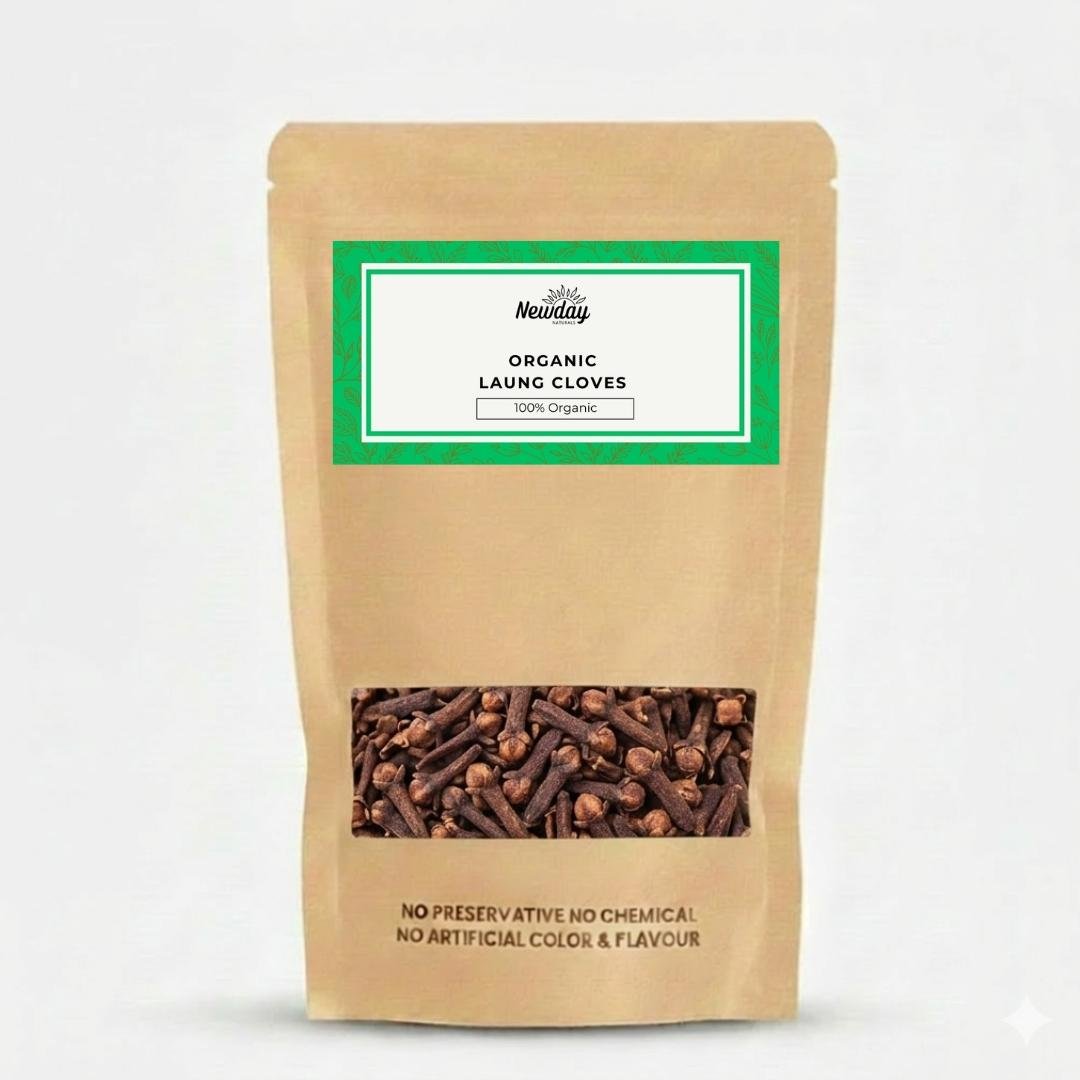
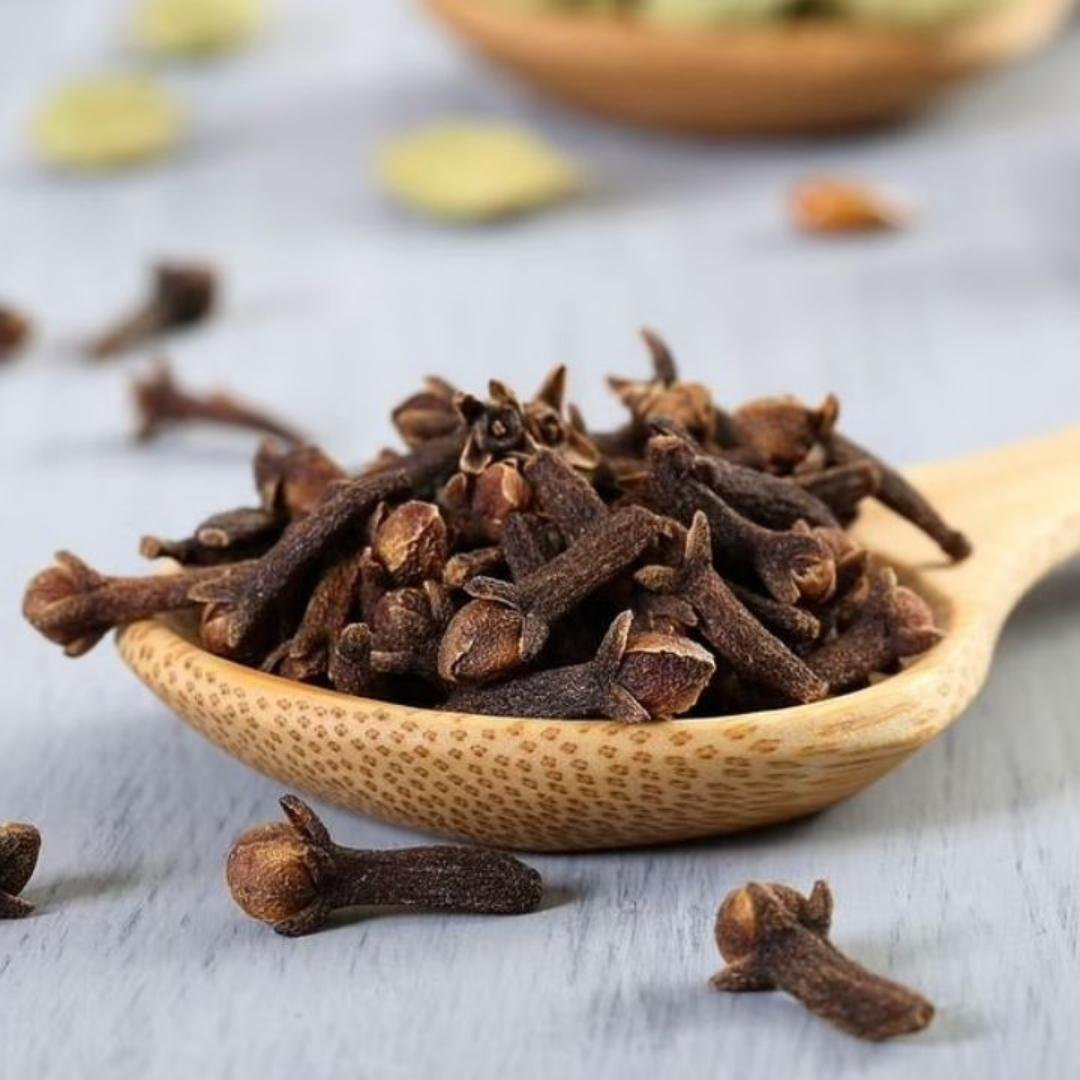
Organic Laung (Cloves) are the dried, unopened flower buds of the evergreen syzygium aromaticum tree. Known for their intense heat and medicinal aroma, they are a powerhouse of flavor. When certified organic, these cloves are harvested without synthetic chemicals, ensuring that the eugenol—the essential oil responsible for their signature "numbing" effect and fragrance—remains pure and potent.
Characteristics
- Appearance: They look like small, dark brown nails (hence the name laung or clou in French). A high-quality organic clove should have a plump "head" (the bud) and a sturdy stem.
- Aroma: Intensely aromatic, warm, and spicy with a hint of sweetness and woodiness.
- Flavor Profile: Extremely pungent. It is a mix of heat, bitterness, and sweetness. Because of the high oil content, cloves can actually cause a temporary numbing sensation on the tongue.
Why "Organic" Matters
- No Fumigation: Cloves are often imported from tropical climates where moisture is high. Conventional cloves are frequently treated with chemical fumigants to prevent mold. Organic certification ensures the spice is dried naturally or with mechanical heat, free from toxic residues.
- Essential Oil Density: Organic farming practices tend to produce cloves with a higher concentration of eugenol. Since cloves are used specifically for this oil, organic versions are often much more "fiery" and effective.
- Sustainability: Clove trees take years to mature. Organic cultivation supports the health of the tropical forest soil, ensuring long-term production without the use of harsh fertilizers.
Culinary Uses
- Whole Spice Infusions: Essential for "tempering" in oil for Indian dals and curries. They are also a key component of the Holy Trinity of whole spices (cardamom, cinnamon, cloves) used to perfume Basmati rice.
- Baking: Ground cloves are a cornerstone of pumpkin spice blends, gingerbread, and fruitcakes.
- Studding: Often pushed into onions for stocks, or into hams and oranges for festive roasting to infuse a deep, woodsy flavor.
- Beverages: A vital ingredient in Masala Chai and mulled wine or cider.
Health Benefits
- Oral Health: Cloves are famous for their antiseptic and analgesic properties. Clove oil is a traditional remedy for toothaches and gum inflammation.
- Digestive Aid: They help stimulate the secretion of digestive enzymes, reducing gas and bloating.
- High Antioxidant Content: Cloves rank among the highest of all spices on the ORAC scale (which measures antioxidant capacity), helping to fight oxidative stress.
Preparation and Storage Tips
- The "Floating" Test: To check the quality, drop a clove into a cup of water. High-quality cloves with plenty of oil will float vertically with the head up. Low-quality or old cloves will either sink or float horizontally.
- The "Snap": When you press a whole clove with your fingernail, it should release a tiny bit of oil. If it's bone dry and dusty, it has lost its potency.
- Storage: Store in a glass, airtight container in a cool, dark place. Cloves are so strong that their aroma can "leak" into plastic containers or neighboring spices, so keep them well-sealed.
Pro-Tip
Because cloves are so powerful, they can easily overwhelm a dish. For most family-sized recipes, 2 to 4 whole cloves are sufficient. If using ground clove powder, start with just a tiny pinch (about 1/8 teaspoon), as it is much more concentrated than the whole bud.