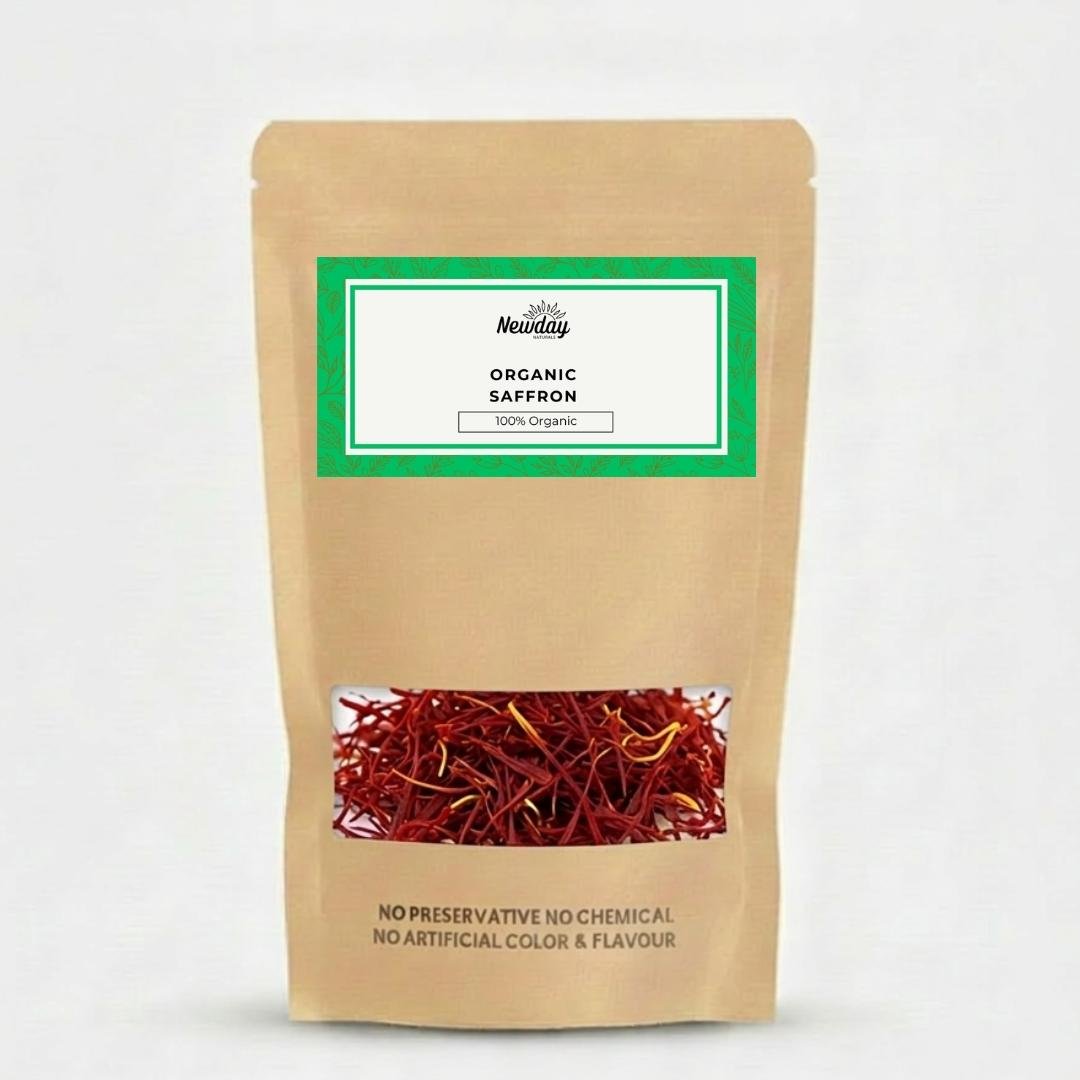
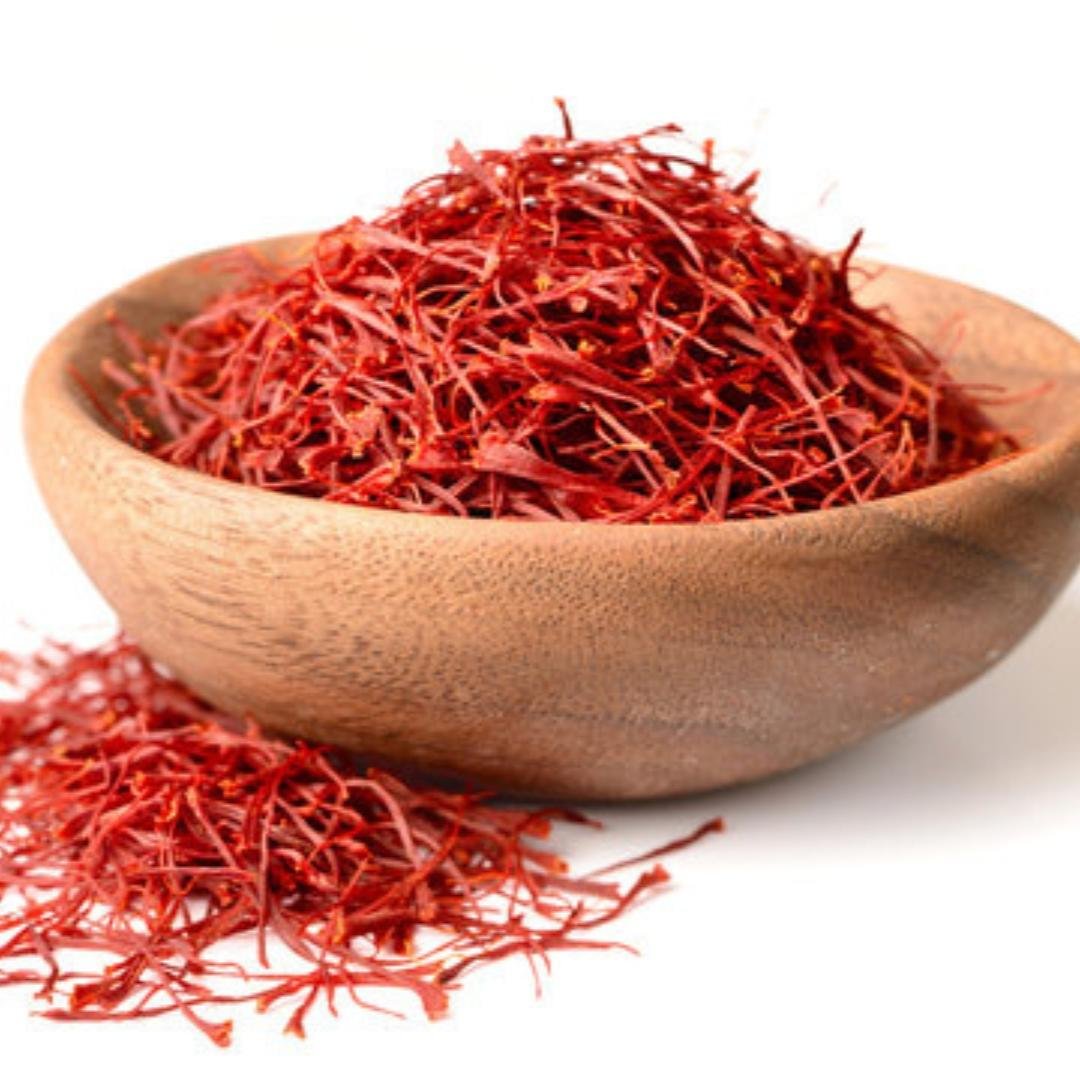
Organic Saffron is the world’s most precious spice, derived from the hand-harvested stigmas of the Crocus sativus flower. Each flower produces only three delicate crimson threads, making it incredibly labor-intensive to produce.
When certified organic, saffron is grown without synthetic pesticides or chemical fertilizers, ensuring the purity of its delicate chemical compounds—primarily crocin (color), picrocrocin (flavor), and safranal (aroma).
Characteristics
- Appearance: Deep, vivid crimson threads with a slightly flared orange-yellow tip. High-quality organic saffron should be uniform in color; an abundance of yellow stems (styles) indicates a lower grade.
- Aroma: Heady, complex, and "honey-like" with a distinct metallic or hay-scented undertone.
- Flavor Profile: Floral, slightly bitter, and earthy. It provides a unique "regal" depth that is impossible to replicate with substitutes.
- Coloring Power: A tiny amount produces a rich, luminous golden-yellow hue in liquids and foods.
Culinary Uses
- Rice Dishes: The heart of Spanish Paella, Persian Polow, and Indian Biryani. It dyes the grains a beautiful gold and provides a floral fragrance.
- Desserts: Widely used in custards, puddings, and milk-based sweets like Kheer or Rasmalai. It pairs exceptionally well with pistachios and almonds.
- Saffron Tea: A few threads steeped in hot water create a soothing, aromatic infusion often enjoyed in the Middle East.
- Seafood: Complements the delicate flavors of white fish and is a key ingredient in Bouillabaisse (French fish stew).
Health Benefits
- Mood Enhancer: Often called the "sunshine spice," saffron has been clinically shown to help alleviate symptoms of mild-to-moderate depression and anxiety.
- Antioxidant Powerhouse: Contains potent plant compounds that protect cells against oxidative stress and inflammation.
- Eye Health: Some studies suggest it can improve vision in adults with age-related macular degeneration (AMD).
- PMS Relief: Traditionally used to reduce the physical and emotional symptoms of premenstrual syndrome.
Why "Organic" and "Purity" Matter
Saffron is one of the most frequently adulterated spices in the world.
- No Synthetic Dyes: Non-organic or "fake" saffron is often dyed with chemicals or mixed with corn silk/safflower to add weight. Organic certification ensures the color and weight are 100% natural.
- The "Cold Water" Test: Place a few threads in cold water. Real organic saffron will slowly release a golden-yellow hue while the thread remains crimson. If the water turns deep red instantly or the thread loses its color, it is likely dyed or fake.
- Chemical-Free: Because saffron is so delicate, the absence of pesticides in organic farming preserves the integrity of its volatile oils.
Preparation and Storage
- The "Soak" Method: Never add saffron threads directly to a dry dish. To extract the full flavor and color, crush the threads and soak them in 2 tablespoons of warm water, milk, or broth for at least 15 to 20 minutes before adding the liquid to your recipe.
- Grinding: For maximum surface area, grind the threads with a tiny pinch of sugar or coarse salt using a small mortar and pestle before soaking.
- Storage: Saffron is highly sensitive to light and moisture. Store it in a foil-wrapped glass vial or an opaque airtight container in a cool, dark place. Never store it in the freezer, as the condensation will ruin the threads.
Pro-Tip
A little goes a long way. For a dish serving four people, you generally only need 10 to 15 threads. If you use too much, the flavor can become unpleasantly medicinal.