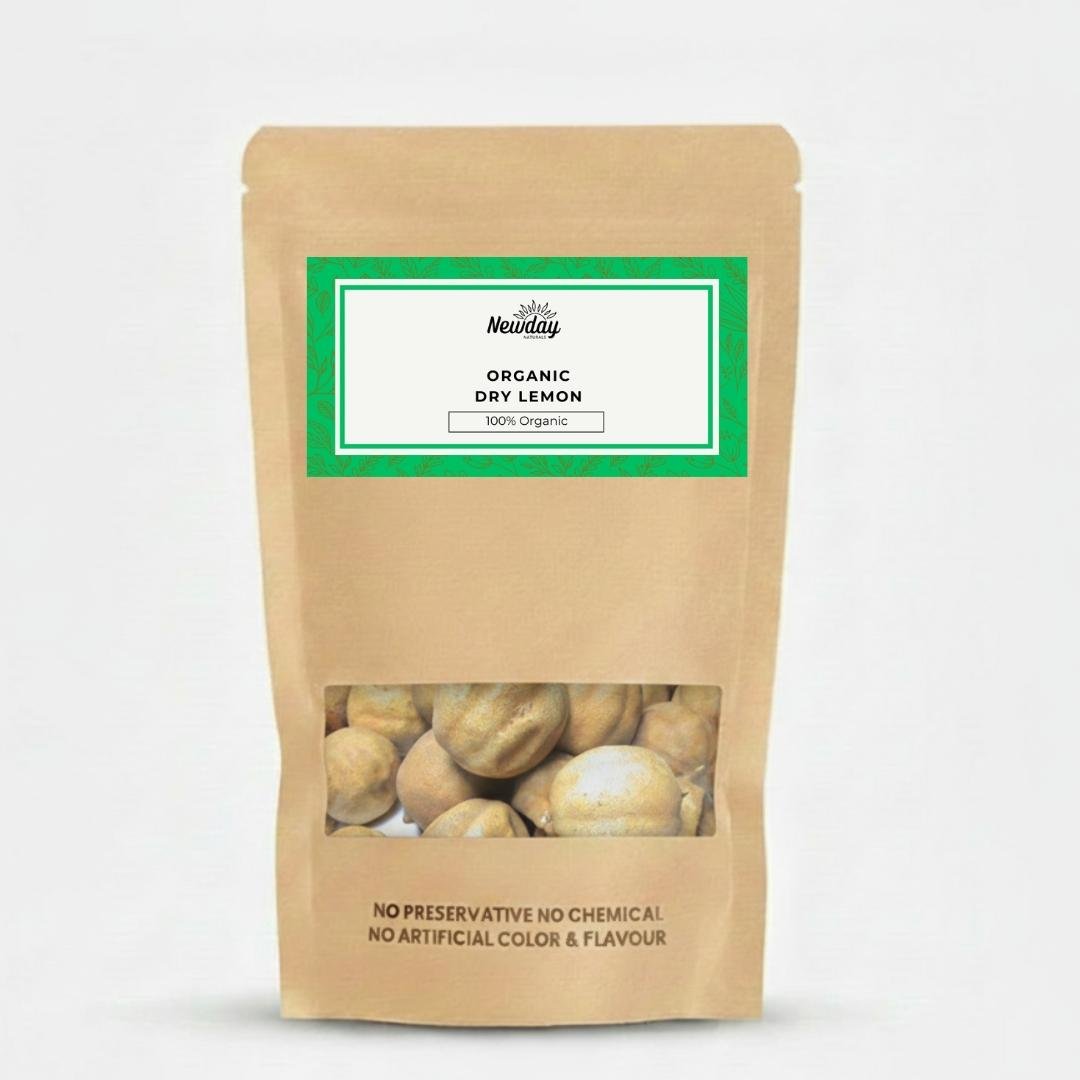
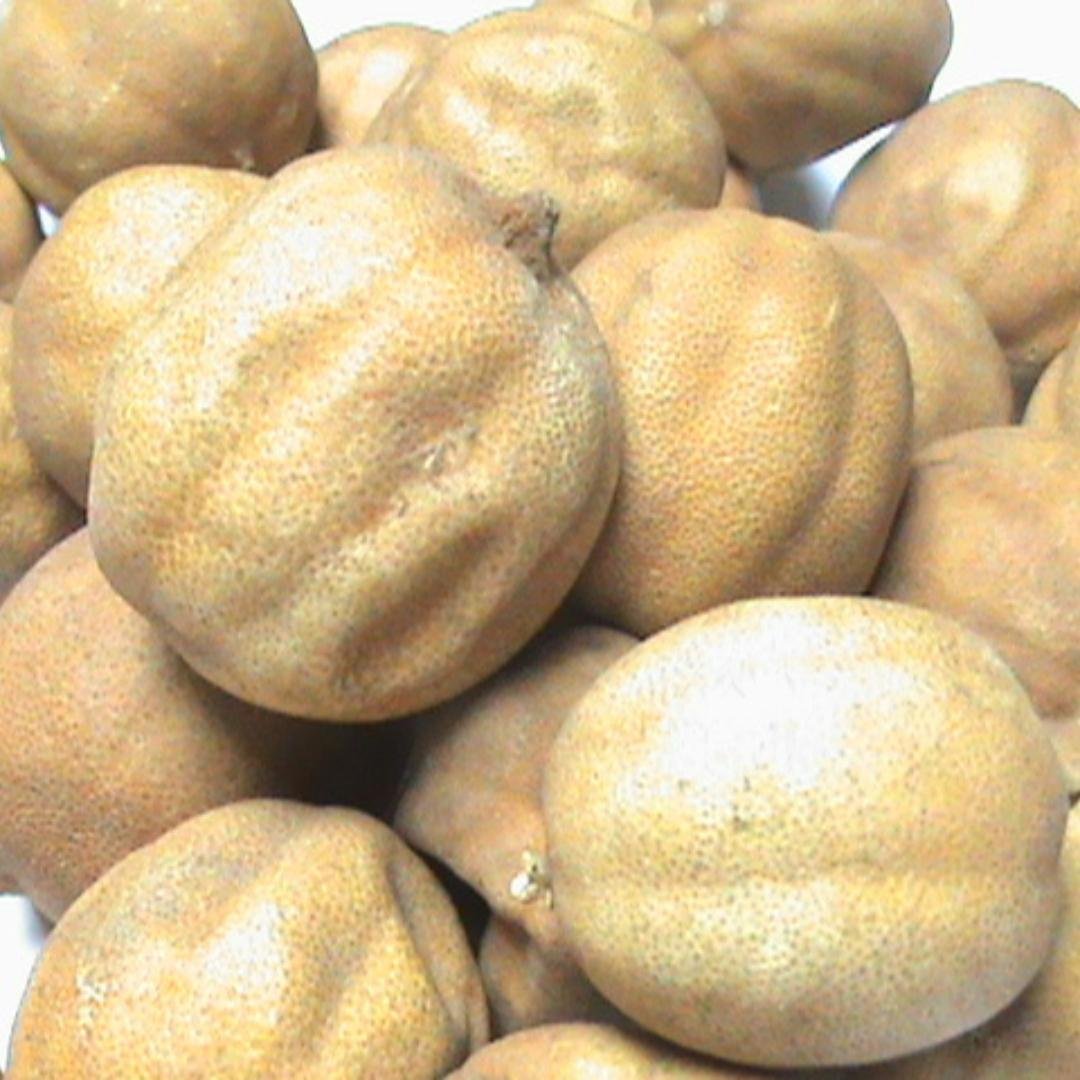
Organic Dry Lemon, often known as Black Lime, Loomi, or Noomi Basra, is a staple of Middle Eastern cuisine. It is produced by boiling fresh limes in salt water and then drying them until they become rock-hard, shriveled, and dark brown or black in color.
Unlike fresh citrus, which offers a bright, acidic zing, dried lemon provides a deep, complex, and slightly fermented sourness that is essential for authentic stews and rice dishes.
Characteristics
- Appearance: Small, round, and shriveled. The exterior is usually a dark chocolate or charcoal-black color.
- Texture: Extremely hard and hollow. The interior contains darkened, dried-out pulp and loose seeds.
- Aroma: Powerful, citrusy, and slightly musky. It has a distinct "earthy" scent that fresh lemons lack.
- Flavor Profile: Intense, concentrated sourness with a subtle, underlying bitterness. It is far more robust than fresh lemon juice and adds a "dark" citrus note to savory dishes.
Culinary Uses
- Stews and Soups: Primarily used in dishes like Ghormeh Sabzi (Persian herb stew) or chicken Kabsa. The lemon is typically pierced with a fork or cut in half and dropped directly into the simmering liquid to release its flavor slowly.
- Rice Dishes: Infuses rice with a delicate citrus aroma that pairs perfectly with fragrant spices like cardamom and saffron.
- Spice Rubs: When ground into a powder, it serves as a sophisticated citrus seasoning for grilled meats, seafood, or roasted vegetables.
- Tea: A traditional tonic in many regions involves simmering dried lemon with water and honey to create a soothing, digestion-friendly beverage.
Preparation Tips
- Pierce Before Cooking: To allow the liquid to penetrate the hard shell and extract the flavor, always poke the lemon with a fork or skewer 3 or 4 times before adding it to your pot.
- Do Not Over-Simmer: If left in a dish for too long, the lemon can impart a strong, medicinal bitterness. Remove the dried lemon once the desired level of acidity is reached, usually after 30 to 45 minutes of cooking.
- Removing Bitterness: If your dish tastes too bitter, it is usually because the seeds remained in the fruit while cooking. For a cleaner flavor, break the lemon open, remove the seeds, and add only the dried shell and pulp to the dish.
Health Benefits
- Digestive Support: Traditionally used to help stimulate appetite and improve digestion after heavy, fat-rich meals.
- Vitamin C & Electrolytes: Even when dried, they retain significant amounts of Vitamin C and minerals, which can help support immune function.
- Anti-Inflammatory: Some traditional wellness practices use dried lemon infusions to help reduce inflammation and soothe the stomach.
Selection and Storage
- Quality Check: Look for completely dry lemons. If they feel slightly soft or squishy, they have not been processed correctly and may develop mold.
- Color Grade: They range from light tan (often called "white" dried limes) to dark black. The darker ones usually have a more intense, fermented, and smoky flavor profile.
- Storage: They are extremely shelf-stable. Keep them in an airtight jar in a cool, dark place. Like other dried spices, they are sensitive to humidity, so ensure they stay completely dry to prevent spoilage.
Pro-Tip
If you are grinding them into a powder, ensure they are bone-dry. If they feel even slightly flexible, pop them in a low-temperature oven (around 100°C) for 15 minutes to crisp them up before grinding. This will ensure you get a fine, shelf-stable powder without any clumping.