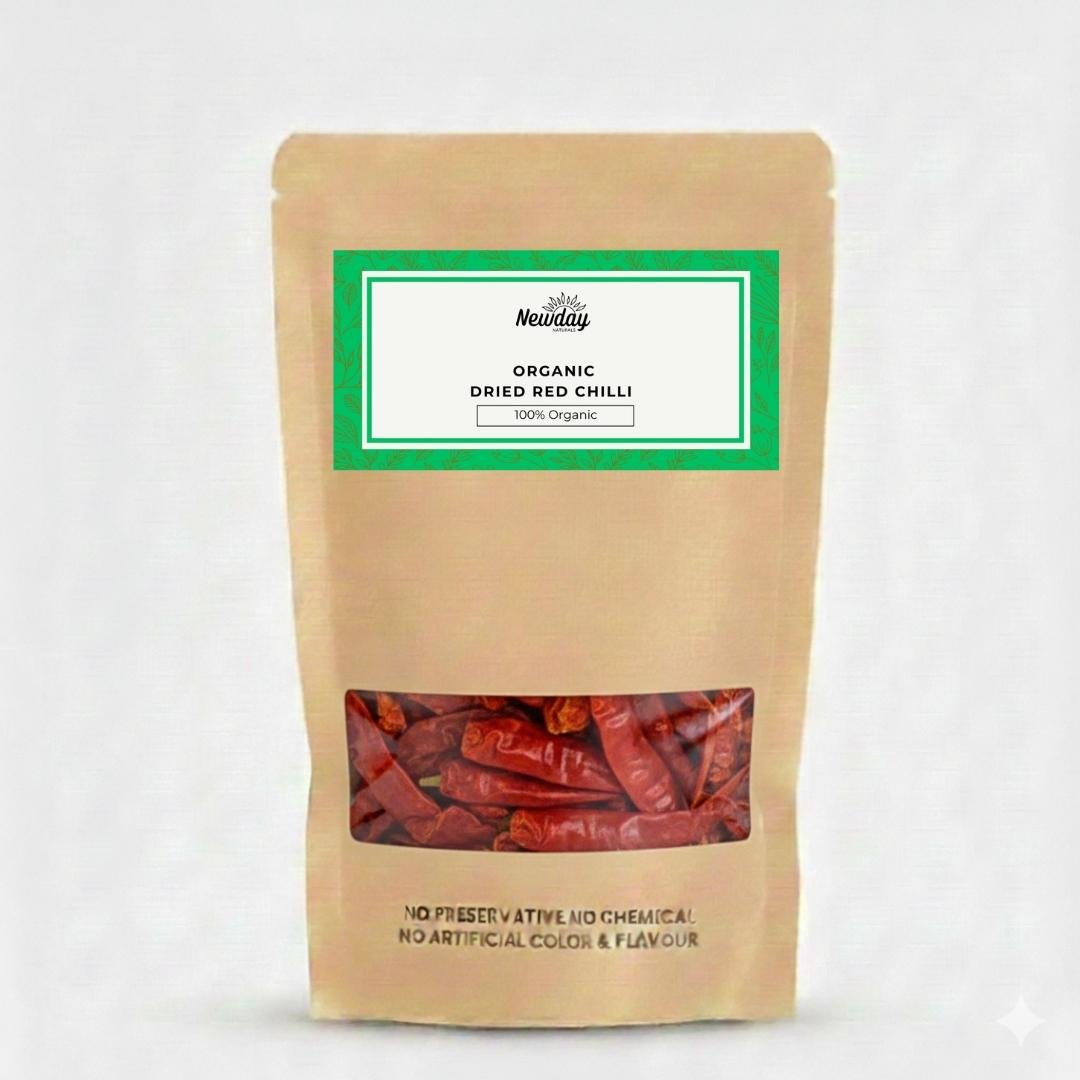
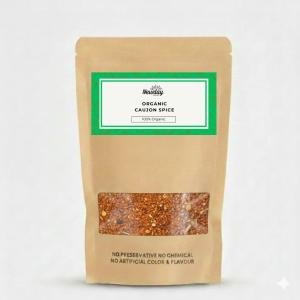
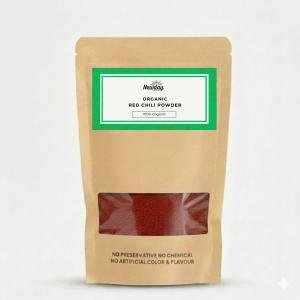
Dried red chilies are simply fully ripened green chilies that have turned red on the vine and been dehydrated. The organic drying process—usually done in the sun or in temperature-controlled solar driers—concentrates the capsaicin (the heat component) and the natural sugars, creating a spice that is both pungent and aromatic.
Characteristics of Organic Chilies
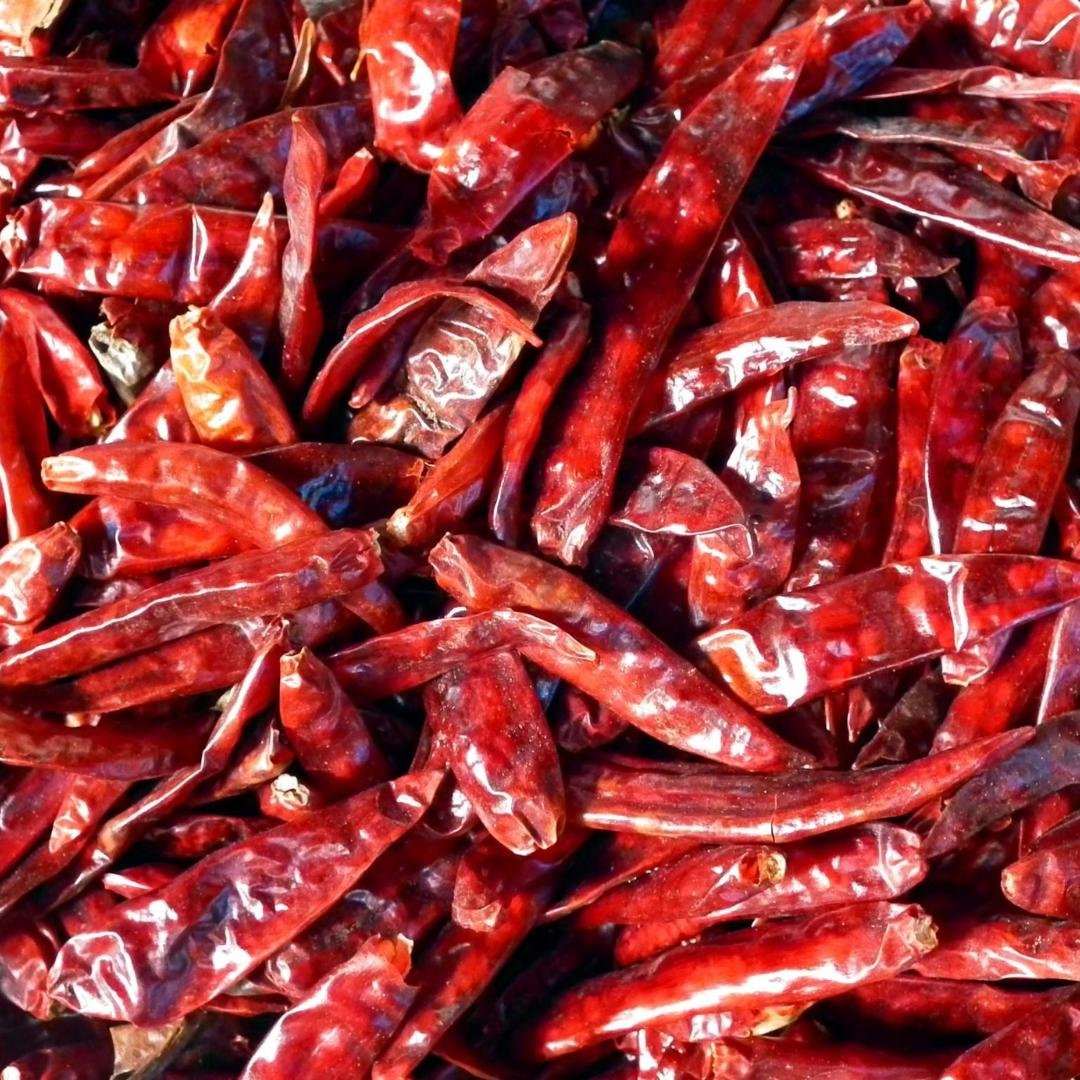
- Appearance: Deep, waxy crimson to dark burgundy. Organic chilies may vary slightly in size and shape, as they aren't "standardized" by chemicals.
- Texture: Brittle, thin skin that "snaps" when broken. The interior should be filled with pale, potent seeds.
- Flavor Profile: Beyond the heat, organic chilies offer notes of sun-dried tomato, smoke, and a hint of berry-like sweetness.
- Heat Level: Ranges from mild (like Ancho) to medium (Guajillo or Kashmiri) to searingly hot (Birds Eye or Habanero).
Benefits
- Metabolism Booster: Capsaicin is a thermogenic compound that can temporarily increase your metabolic rate and help burn fat.
- Rich in Vitamin A & C: Even when dried, they retain significant amounts of antioxidants that support immune health and vision.
- Natural Pain Relief: Capsaicin is widely used in topical and dietary forms to help reduce inflammation and alleviate joint pain.
- Heart Health: Chilies can help improve blood circulation and have been linked to lower blood pressure in some studies.
- Preservative Properties: Naturally antimicrobial, which is why they have been used for centuries to preserve food in warm climates.
Culinary Uses
- The "Tarka" (Tempering): Sizzle whole dried chilies in hot oil or ghee with cumin seeds. This infuses the oil with a smoky heat that is poured over lentils (Dal) or curries.
- Homemade Chili Flakes: Pulse whole organic chilies in a blender for 5 seconds. You’ll get fresher, more potent flakes than any store-bought shaker.
- Infused Oils: Place whole chilies in a bottle of high-quality olive oil for two weeks to create a spicy finishing oil for pizza, pasta, or grilled fish.
- Rehydrated Pastes: Soak chilies in hot water for 20 minutes, then blend with garlic and salt to create the base for authentic Mexican moles or Thai curry pastes.
- Spicy Broths: Drop 2–3 whole chilies into a simmering soup or bone broth to add a subtle, warming “back-heat.”
Why "Organic" Truly Matters for Chilies
Chilies are thin-skinned fruits, making them highly susceptible to absorbing chemical residues.
- No "Azo" Dyes: Some non-organic dried chilies are sprayed with artificial red dyes to make them look "fresher." Organic certification ensures the color is 100% natural.
- Sulfur-Free: Conventional drying often uses sulfur dioxide to preserve color. Organic chilies are dried naturally, preserving the true flavor profile.
- Better "Bloom": When you fry an organic chili in oil, it "blooms" (expands and releases aroma) more effectively because the natural oils haven't been degraded by harsh chemical processing.
Pro-Tips for Handling
- The "Stem" Test: A high-quality dried chili should still have its stem attached. This helps keep the seeds (where most of the heat lives) inside and prevents the oils from going rancid.
- Deseed for Flavor: If you want the smoky, fruity flavor of the chili without the "burn," split the chili open and shake out the seeds before cooking.
- Storage: Store in a cool, dry place in an airtight container. Exposure to moisture will make them rubbery, while light will cause the vibrant red color to fade.