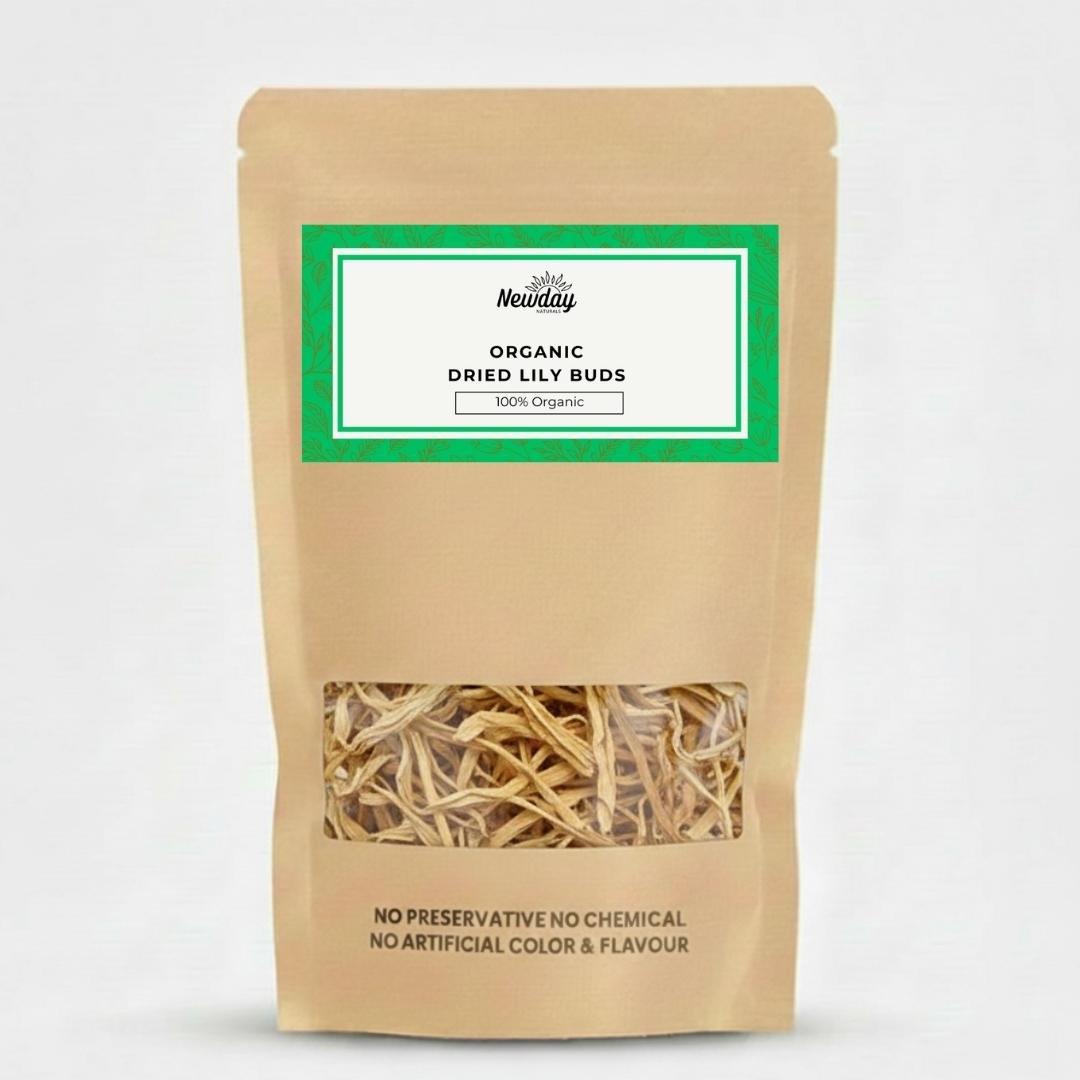
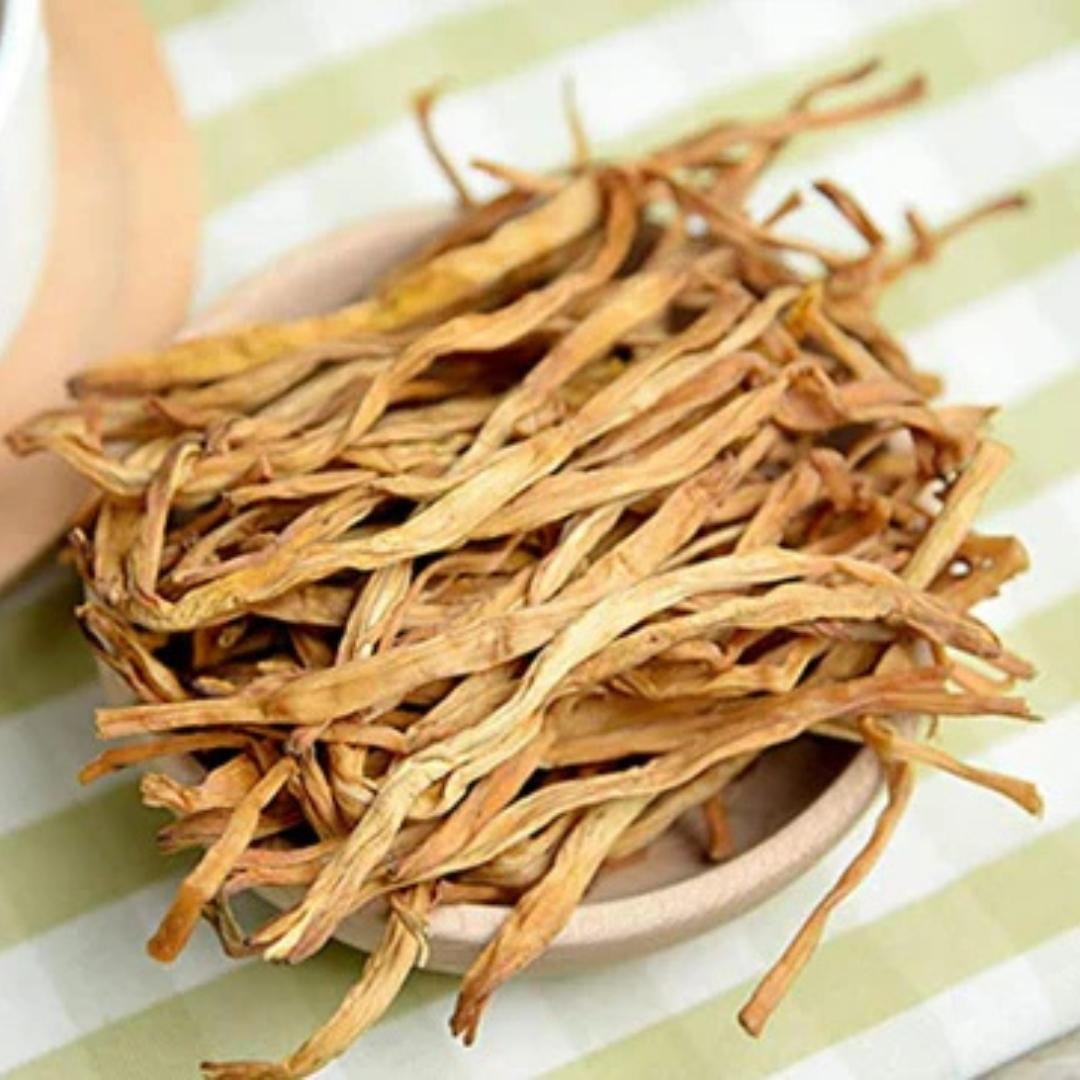
Dried Lily Buds, often known as “Golden Needles”, are the unopened, dried flowers of the daylily. They are a staple in East Asian cuisine, prized for their unique, velvety texture and delicate, sweet-savoury flavour.
Characteristics
- Appearance: Long, thin, slightly shriveled, and tan to dark-brown needles. When rehydrated, they swell to several times their size and become smooth and pliable.
- Texture: When properly prepared, they have a firm, slightly crunchy, and "silky" bite—very similar to a combination of asparagus and mushroom.
- Flavor Profile: Subtle, earthy, and mildly floral with a hint of natural sweetness. They are rarely the "main" flavor; instead, they act as an excellent sponge that absorbs the flavors of the sauces and broths they are cooked in.
- Aroma: Light, sweet, and faintly herbal.
Culinary Uses
- Hot and Sour Soup: An essential ingredient in authentic Hot and Sour soup, providing texture and a subtle sweetness that balances the sharp vinegar and heat.
- Stir-Fries: A classic partner for wood-ear mushrooms, shredded chicken, or pork. They add a sophisticated "chew" to vegetable-heavy stir-fries.
- Braised Dishes: They are frequently used in long-simmered dishes, such as braised chicken or pork belly. The buds absorb the savory cooking liquid, becoming juicy and flavorful.
- Steamed Dishes: Often used in steamed chicken or fish dishes; they absorb the aromatic juices released during the steaming process.
Preparation (Crucial Step)
Dried lily buds are dense and must be rehydrated before use:
- Soak: Place the buds in a bowl of warm water for 20–30 minutes until they are soft and plump.
- Trim: Once rehydrated, there is often a small, tough, hard knot at one end of the bud. Pinch or cut this off and discard it, as it remains woody even after cooking.
- Knotting: For a refined presentation, some chefs tie each bud into a small loose knot before adding them to soups or stir-fries.
Health Benefits
- Calming Properties: In traditional herbal practices, lily buds are known as a "cooling" food and are often consumed for their ability to soothe the spirit and relieve mild stress or restlessness.
- Nutrient Dense: They are a good source of iron, protein, and dietary fiber.
- Antioxidant Content: They contain high levels of flavonoids and other antioxidants that help support immune function.
Selection and Storage
- Color Matters: Look for buds that are a consistent golden-tan or brown. If they look overly dark or black, they may have been improperly dried or treated with chemicals.
- Quality Test: High-quality buds should be fragrant and dry. If they feel damp or soft in the package, do not buy them, as they are susceptible to mold.
- Storage: Store them in an airtight container in a cool, dark place. They are very shelf-stable and can last for over a year. Avoid plastic bags if possible; glass jars are ideal to keep them crisp and moisture-free.
Safety Note
Always ensure you are buying "food-grade" dried lily buds meant for consumption. While most culinary lilies are safe, ensure you are buying from a reputable source that specifically labels them for cooking.