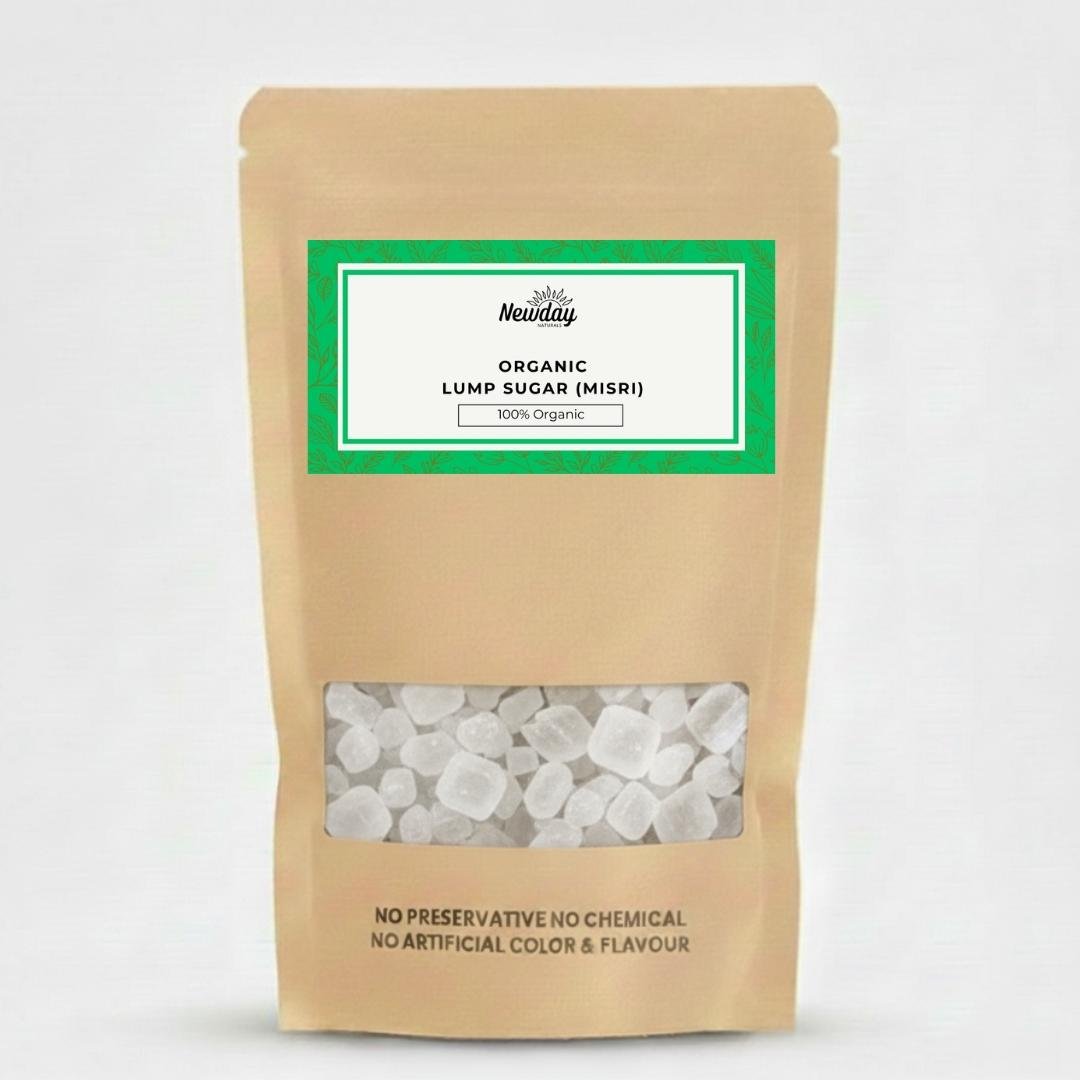
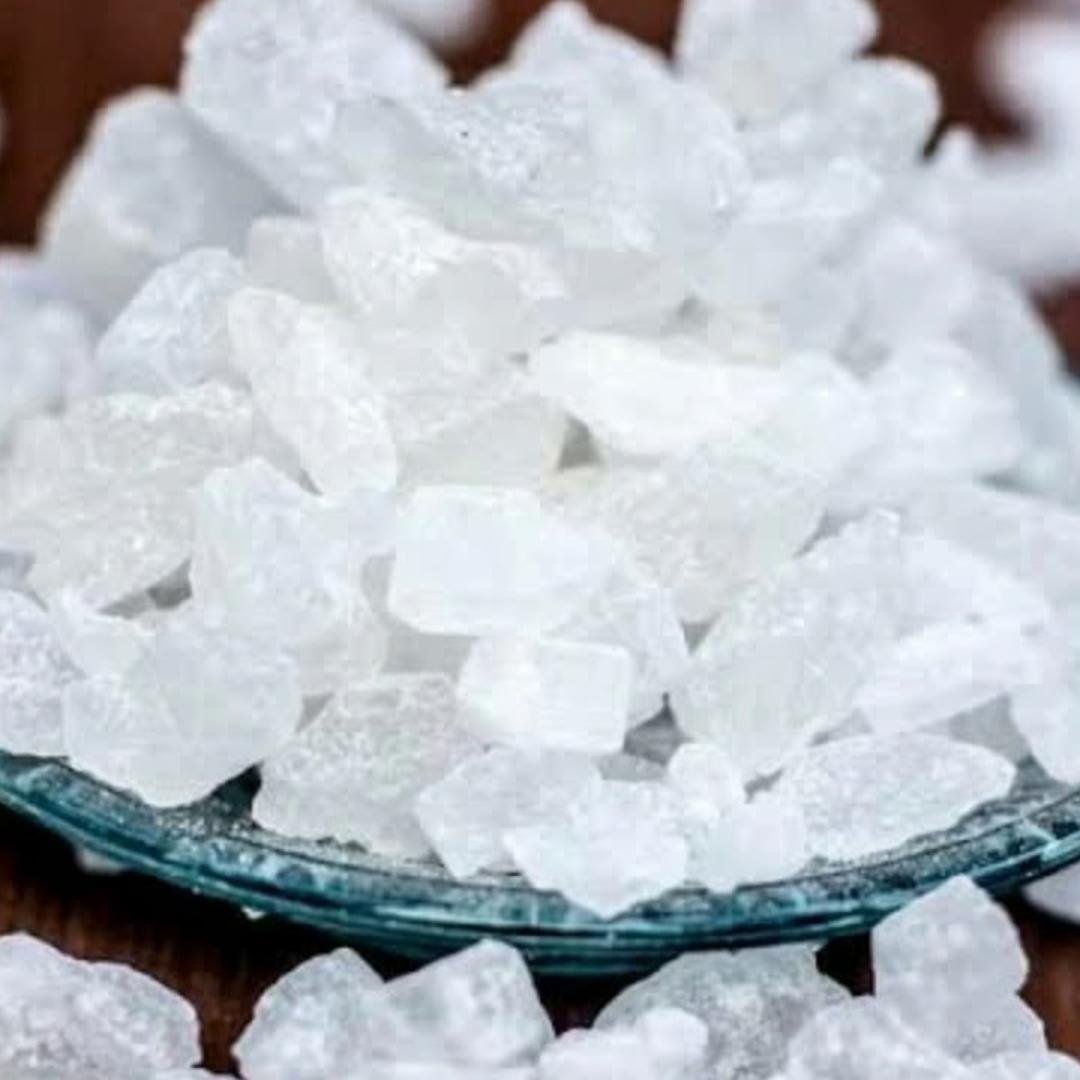
Lump Sugar, commonly known as Misri or Rock Sugar, is the crystallized form of sugar. Unlike standard refined white sugar, which is granulated, Misri is produced by cooling a supersaturated sugar solution around a thread or string, creating large, translucent, geometric crystals.
Characteristics
- Appearance: Large, irregular, glassy crystals that look like chunks of clear or slightly amber quartz.
- Texture: Extremely hard. It does not dissolve as quickly as granular sugar and provides a slow, steady sweetness.
- Flavor Profile: Pure, clean, and mildly sweet. It lacks the "cloying" or intense sugary punch of refined white sugar.
- Aroma: Odorless.
Cultural and Culinary Uses
- Breath Freshener and Digestive Aid: In South Asia, Misri is frequently served after meals—often mixed with fennel seeds (saunf). This combination acts as a natural digestive aid and a refreshing palate cleanser.
- Cooling Agent: In Ayurvedic practices, Misri is considered to have "cooling" properties. It is often dissolved in water, milk, or herbal teas to soothe the body during hot summer months.
- Medicinal Syrups: Because of its pure, non-gritty nature, it is often used as the base for homemade cough syrups and soothing throat concoctions. It provides a coating effect that helps relieve a sore throat or hoarseness.
- Religious Offerings: Misri is a traditional component of Prasad (sacred food offerings) in many temples and is often used in festive or ceremonial cooking.
- Gourmet Sweetening: Because the crystals are pure, they are excellent for sweetening delicate teas, infusions, or traditional desserts without creating the cloudy, thick syrup that granulated sugar often produces.
Health and Traditional Perspectives
- Soothes Sore Throats: When sucked on or dissolved in warm water, Misri helps coat the throat and reduce irritation or cough symptoms.
- Energy Boost: As a simple carbohydrate, it provides an immediate, clean source of energy.
- Digestive Harmony: When paired with fennel seeds, it helps reduce acidity and aids in the breakdown of food, making it a common post-meal tradition.
- Caution: While it is often viewed as "healthier" or more "natural" than white sugar in traditional contexts, it is still chemically sucrose. It should be consumed in moderation, especially by those monitoring blood sugar levels.
Selection and Storage
- Purity Matters: When buying Misri, look for clear, translucent crystals. If the crystals appear dull or yellowish, they may be lower-grade or have impurities.
- Size Preference: You can find Misri in large chunks or smaller, "crushed" pieces. The larger chunks are better for long-term storage and ceremonial uses, while the smaller pieces are more practical for daily tea or cooking.
- Storage: Store in an airtight container in a cool, dry place. Misri is highly hygroscopic, meaning it will absorb moisture from the air and eventually stick together if left exposed. Avoid keeping it in humid areas, as the crystals can become tacky or begin to melt.
Pro-Tip
If you are using Misri to sweeten a drink, do not try to crush the large crystals unless necessary. Placing a whole crystal in a hot liquid and letting it dissolve slowly is part of the experience, as it prevents the drink from becoming overly sweet too quickly.